
GREEN TOURISM DEVELOPMENT LINKED WITH BIODIVERSITY CONSERVATION IN XUAN THUY NATIONAL PARK
- Center for Nature Conservation and Development
- Aug 25, 2025
- 2 min read
Aiming to foster sustainable green and community-based ecotourism, in August 2025, Center for Nature Conservation and Development (CCD), in collaboration with the Management Board of Xuan Thuy National Park (Ninh Binh province), developed a Master Plan for Ecotourism, Leisure, and Recreation Development in Xuan Thuy National Park through 2030, with a vision to 2050.
The plan focuses on identifying and zoning signature tourism sites and routes based on natural conditions, biodiversity values, and local cultural heritage. At the same time, it proposes solutions to attract investment in tourism infrastructure while strengthening the park’s management and monitoring capacity to ensure sustainable tourism development. This approach contributes to enhancing biodiversity conservation and restoring the unique ecosystems of this internationally important wetland area.


CCD will continue to accompany Xuan Thuy National Park in tourism planning, management capacity building, and developing community-based tourism models. These efforts are expected to create stable income sources for local communities, while also raising public awareness of nature conservation and the protection of the Red River Delta’s biodiversity values.
Did you know? In 1988, the Xuan Thuy Wetland Reserve was recognized as Vietnam’s and Southeast Asia’s first Ramsar Site - a wetland of international importance, particularly as a stopover for migratory waterbirds. On January 2, 2003, the reserve was officially upgraded to Xuan Thuy National Park, covering a total natural area of 7,110.08 hectares. With its outstanding biodiversity and cultural values of the Red River Delta, in December 2004 UNESCO designated Xuan Thuy as a core area of the Red River Delta Biosphere Reserve.


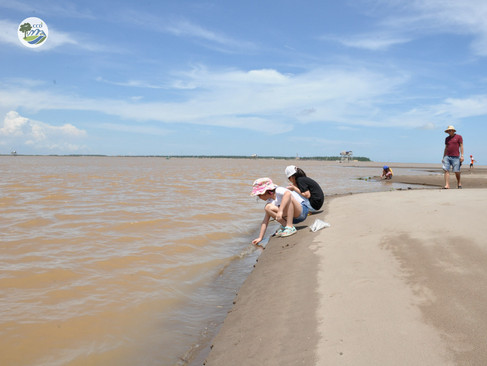
Located at the mouth of the Red River, Xuan Thuy is home to a wide range of wetland flora and fauna characteristic of northern Vietnam. It provides habitat for more than 222 waterbird species, including many globally threatened species such as the Black-faced Spoonbill, Spoon-billed Sandpiper, Nordmann's Greenshank, Spot-billed Pelican, etc. Its mangrove ecosystems are equally rich, with characteristic tree species such as Kandelia candel, Sonneratia caseolaris, Avicennia, and Rhizophora apiculata Blume.
The park’s buffer zone also preserves unique cultural values of the Red River Delta, such as traditional thatched-roofed houses and ancient cheo (oral folk music performance). The harmony of natural and cultural values gives Xuan Thuy a distinctive appeal and opens up vast potential for tourism development, generating additional income for local communities while providing resources for conservation efforts.


Comments