
Assessment of current management practices and conservation status of Dalbergia cochinchinensis and D. oliveri in Gia Lai, Kon Tum and Dak Lak provinces
- Center for Nature Conservation and Development
- Nov 5, 2019
- 4 min read
Updated: Oct 3, 2025
Vietnam’s wildlife has undergone a long period of over exploitation. As a result, populations of many species have been seriously declined and some of them such as Javan rhinoceros (Rhinoceros sondaicus annamiticus) and Kouprey (Bos sauveli) were extinct. Sharing similar situation, many of the country’s flora are under high pressure of exploitation to fill the needs of the market that lead many plant species to brink of extinction. In Vietnam, rosewood (Dalbergia spp.), ladys’s slipper orchids (Paphiopedilum spp.) and marbled jewel orchids (Anoectochilus spp.) are among the most threatened wildlife due to illegal logging and trade.
The Center for Nature Conservation and Development (CCD) has been running a long-term program to support the protection and recovery of endangered wild fauna and flora with a focus on strengthening in-situ conservation and improving the effectiveness of law enforcement efforts to effectively prevent illegal hunting, logging and trafficking of Vietnam’s endangered species of wild flora and fauna that being trafficking from and through the country.
In September 2019, CCD in cooperation with Vietnam CITES management agency conducted an assessment of management, protection and conservation efforts for the highly threatened Dalbergia cochinchinesis and Dalbergia oliveri in Dak Lak, Gia Lai and Kon Tum provinces.
The findings indicated that the populations of these two species have been rapidly declined in all original known distribution areas due to over-exploitation for high-end furniture and handicraft products. In Kon Tum province, a biggest natural population of Dalbergia cochinchinesis is only found in Dak Uy forest where it has already been gazette as Special Use Forest (also called as protected area) in an area of 546.24 ha. The protected area possesses about 800 matured Dalbergia cochinchinesis trees (>20cm in diameter) and many younger trees. Dalbergia cochinchinesis was found to be scattered distributed in other areas of Kon Tum province. In Gia Lai province, the population of Dalbergia cochinchinesis has dramatically reduced and only remained few mature individual trees in a scattered forests and some found in local forest land own by households in Krong Pa district. Some mature Dalbergia cochinchinesis trees (> 20cm in diameter) are reported to be in Kon Ka Kinh national park and Kon Chu Rang nature reserve. In Dak Lak province, the trees with diameter greater than 20cm are found in Yok Don national park, Ea So nature reserve and Krong Nang watershed protection forests with low density. Other areas have few scattered mature trees and regenerated trees but quite fragmented.
In terms of conservation efforts, there is only Kon Tum province that has a conservation program of Dalbergia cochinchinesis. The province established Dak Uy protected area to protect this species. In 2018, the province planted 4,500 seedlings within the protected area and 6,600 seedlings in other places. Gia Lai and Dak Lak provinces have not got any conservation or restoration program for Dalbergia cochinchinesis.
It is the same as the Dalbergia cochinchinesis, the Dalbergia oliveri has been logging for making furniture products and fine arts. Dalbergia oliveri became the main subject of exploitation when the source of Dalbergia cochinchinesis timber is exhausted. In three surveyed provinces, the population of Dalbergia oliveri has been degraded and is only found in protected areas with low density. In Kon Tum province, Dalbergia oliveri are reported in Chu Mom Ray national park, Dak Uy protected area and watershed protection forest of Dak To, Dak Ha and Ngoc Hoi districts. In Gia Lai province, Dalbergia oliveri distributes in Kon Chư Răng, Kon Ka King, and watershed protection forest of Krong Pa and Chu Pah districts. In Dak Lak, Dalbergia oliveri is remained in Yok Don national park, Ea So nature reserve and Chu Yang Sin national park as well as other watershed protection forests. Forest plantation programs of all three provinces have not got this species.
There are few propagation activities of these two species. However, only one propagation facility was found in the three province that was at the Center for Tropical Forestry in Gia Lai province. The survey also found that some families in Krong Pa district are protecting regenerating trees Dalbergia cochinchinesis in their cashew plantation, however, this is in small scale.
All three provincial FPDs elaborated that there is absolutely no exploitation of rosewood from natural forests. However, some illegal activities such as collection of remaining roots and stumps of previously logged rosewood trees, are still occurred with small amount. Obviously, threats to rosewood are remaining. Without stronger forest protection and effective forest recovery efforts, these two species of rosewood may vanish from their traditional distribution areas soon.
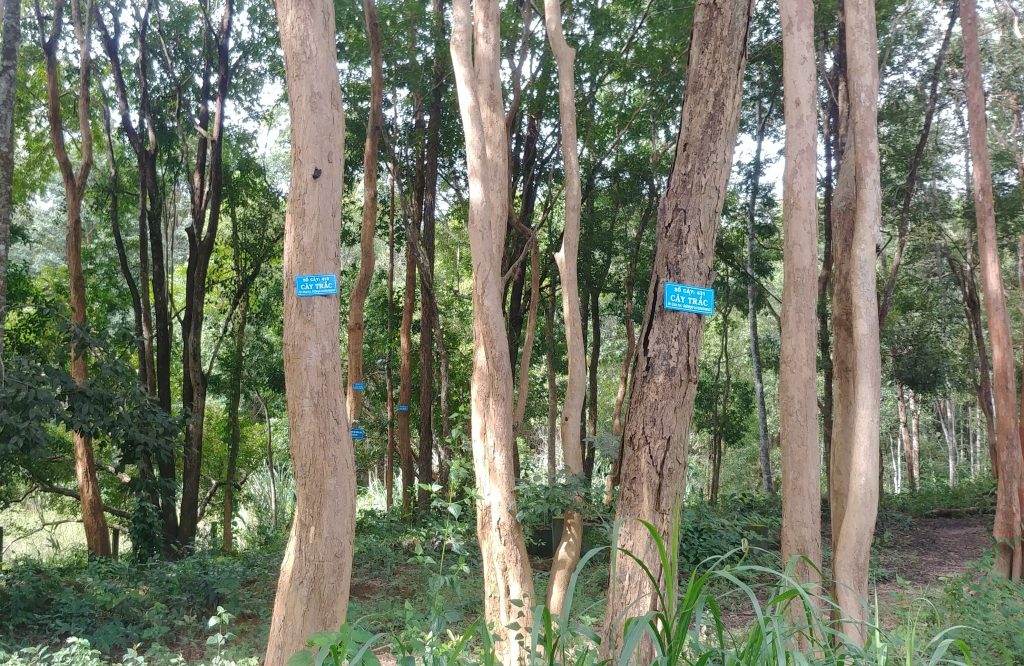 Photo 1: Dalbergia cochinchinesis naturally distributes in Dak Uy forest in Kon Tum province. Photo: La Quang Trung/CCD | 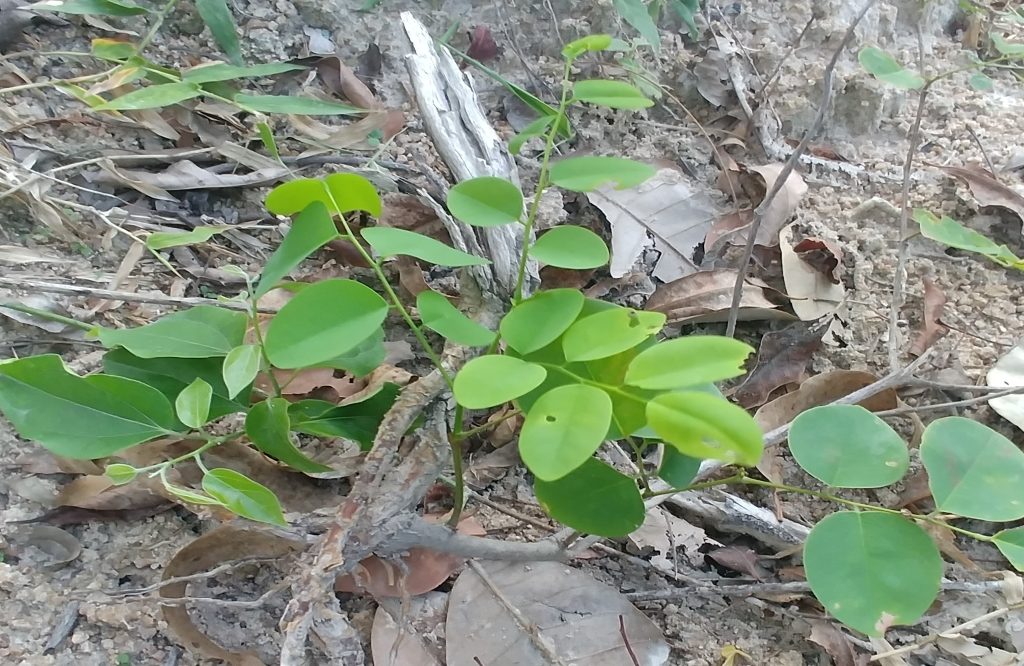 Photo 2: Dalbergia cochinchinesis is naturally regenerated in Krong Pa district, Gia Lai province. Photo: La Quang Trung/CCD |
 Photo 3: Dalbergia cochinchinesis is geminated from seeds in the nursery of the Center for tropical forestry in Gia Lai province. Photo: La Quang Trung/CCD |  Photo 4. A Dalbergia oliveri seedling in Yok Don national park, Dak Lak province. Photo: La Quang Trung/CCD |
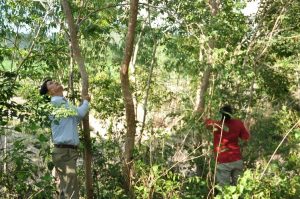 Photo 5: Dalbergia cochinchinesis are being generated and protected in a cashew garden of a household in Krong Pa district, Gia Lai province. Photo: Nguyen Manh Ha/CCD | 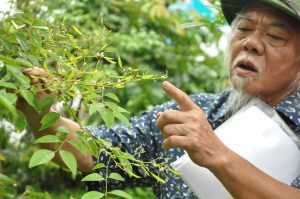 Photo 6. Dalbergia cochinchinesis blosssoms in Yok Don national park, Dak Lak province. Photo: Nguyen Manh Ha/CCD |
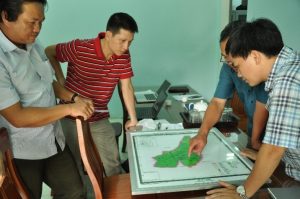 Photo 7. The specialist group was talking to Dak Uy forest MB on protection and recovery of Dalbergia cochinchinesis. Photo: Nguyen Manh Ha/CCD. | 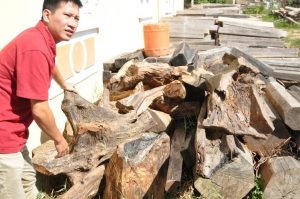 Photo 8: A stump of Dalbergia oliveri in a timber pile confiscated from illegal trade in Krong Pa district, Gia Lai province. Photo: Nguyen Manh Ha/CCD. |


Comments